
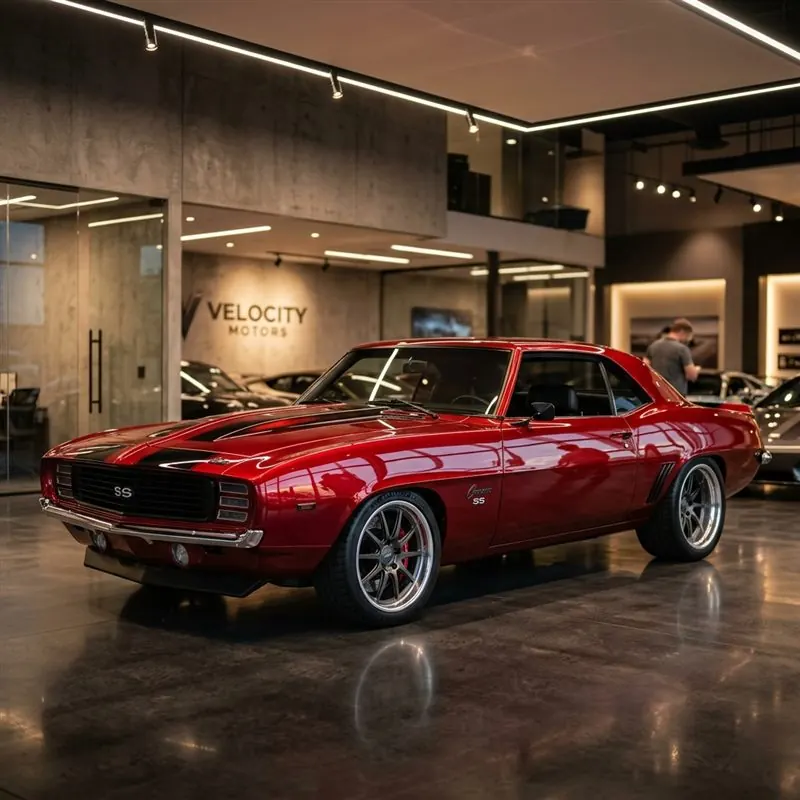
Restomod vs restoration — when embarking on a vintage vehicle project, every car owner faces a fundamental crossroads: Should you execute a factory-correct Concours Frame-Off Restoration, or build a modern Pro-Touring Restomod Build? Both philosophies celebrate American automotive history, but they deliver drastically different driving experiences, build budgets, maintenance requirements, and long-term resale value retention.
At Carolina Street Rods, we build both show-winning rotisserie restorations and high-octane 500HP LS3 restomods for clients across North Carolina and Florida. In this definitive guide, we analyze the mechanical differences, financial projections, insurance requirements, and driving characteristics of both build pathways — helping you make the right choice for your garage and your wallet.
- 1. What is a Restomod vs Concours Restoration?
- 2. Total Build Cost & Labor Hours Comparison
- 3. Drivability, Modern Comfort & Daily Reliability
- 4. US Auction Resale Values & Market Trends
- 5. Specialty Classic Car Insurance & Valuation
- 6. Decision Matrix: Which Right for Your Car?
- 7. Frequently Asked Questions
1. Defining the Paradigms: Restomod vs Concours Restoration
The Concours Restoration Philosophy:
A true Concours Restoration is a museum-grade preservation effort. The goal is to bring the vehicle back to the exact condition it left the assembly line in 1969 or 1957. Every single component — from numbers-matching engine blocks, date-coded spark plug wires, factory single-stage lacquer paint, drum brakes, and original bias-ply tires down to the factory inspector chalk marks on the differential housing — is meticulously sourced or reconditioned. Altering factory specifications is strictly forbidden.
The Restomod Philosophy (Restoration + Modernization):
A Restomod preserves the iconic vintage exterior styling of classic American muscle cars or 1930s street rods while replacing outmoded running gear with modern automotive technology. A typical restomod build pairs a classic body (such as a 1969 Chevrolet Camaro SS or 1955 Chevy 3100 Pickup) with a fuel-injected GM LS3 or Ford Coyote V8 engine, a Tremec 6-speed manual or 4L60E automatic transmission, Wilwood 6-piston disc brakes, independent coilover suspension, power rack-and-pinion steering, Vintage Air climate control, and Dakota Digital RTX instruments.
2. Subsystem Head-to-Head: Drivetrain, Chassis & Interior Engineering
When deciding between a concours restoration and a restomod build, evaluating the individual mechanical subsystems is vital. Here is how both build routes compare across core engineering areas:
Drivetrain & Engine Reliability:
A original carbureted engine (such as a Chevy 283ci, 327ci, or 396ci Big Block) possesses undeniable historical character. However, running a 50-year-old carbureted engine presents ongoing maintenance demands — including vapor lock during hot summer drives, choke adjustment during winter cold starts, and fuel float bowl leaks caused by modern ethanol-blended gasoline. In contrast, a restomod equipped with a modern turnkey GM LS3 6.2L V8 engine swap or Ford Coyote 5.0L V8 utilizes electronic multi-port fuel injection, drive-by-wire throttle control, and digital ECU engine mapping. It starts instantly with the push of a button, idling smoothly at 650 RPM regardless of ambient temperature or elevation.
Chassis, Suspension & Braking Dynamics:
Vintage muscle car chassis were engineered in an era of bias-ply tires and low-speed limits. Factory worm-and-roller steering gearboxes feel loose on modern highways, while 4-wheel drum brakes or single-piston front discs suffer from severe brake fade under aggressive driving. A modern restomod replaces the original stamped steel subframe with a high-rigidity aftermarket chassis — such as an Art Morrison GT-Sport frame or Roadster Shop Fast Track chassis. Featuring independent front suspension, rack-and-pinion power steering, adjustable coilover shocks, 4-link rear suspension, and Wilwood 13-inch 6-piston disc brakes and pro-touring chassis, a pro-touring restomod handles corners like a modern sports car while bringing a 3,400 lb muscle car to a sudden, confident stop.
Transmission & Highway Cruising Ability:
Factory 2-speed Powerglide or 3-speed automatic transmissions lack overdrive gears, forcing vintage engines to turn 3,200+ RPM at 65 MPH highway speeds. This high engine RPM causes cabin noise, vibration, and poor fuel economy (8 to 12 MPG). Restomod builds integrate modern overdrive transmissions — such as the Tremec T56 Magnum 6-speed manual or GM 4L60E/4L80E automatic overdrive. With a 0.63:1 sixth-gear ratio, an LS-swapped 1969 Camaro cruises comfortably down the interstate at 75 MPH at a quiet 1,750 RPM while delivering 20+ MPG highway efficiency.
Interior Comfort & Digital Amenities:
Original vinyl bench seats lack lateral support, and factory heater boxes struggle during extreme summer heat. Restomod interiors combine vintage aesthetics with modern luxury: custom bolstered leather bucket seats, Vintage Air Gen IV electronic climate control, Dynamat sound insulation, power windows, and electronic instrument clusters like the Dakota Digital RTX series. These gauges look identical to factory 1960s analog clusters when powered off, but illuminate with crisp LED backlighting and digital diagnostic displays when the ignition key turns.
3. Master Comparison Matrix: Restomod vs Restoration
| Evaluation Parameter | Concours Restoration | Pro-Touring Restomod |
|---|---|---|
| Drivability & Highway MPG | Moderate (10-14 MPG, high RPM cruise) | Exceptional (18-24 MPG, overdrive cruise) |
| Horsepower Output | Factory Specs (180 - 350 HP) | Modern Power (430 - 750+ HP) |
| Braking & Safety | 4-Wheel Drum or 1-Piston Disc | Wilwood/Baer 4 & 6-Piston Discs |
| Cold Start & Reliability | Carbureted (Requires choke warming) | Turn-key Electronic Fuel Injection (EFI) |
| Climate & AC | Factory R12 AC or Heater Only | Vintage Air R134a Electronic AC |
| Typical Build Cost | $45,000 - $110,000 | $75,000 - $185,000+ |
| Primary Target Buyer | Purist Collectors & Museums | Active Drivers & Enthusiasts |
| 2026 AUCTION MARKET DEMAND | High for Rare RPO Codes | Surging Demand Across All Generations |
4. Financial Investment & Resale Market Valuation
A common misconception is that restomods destroy classic car value. In reality, recent collector car market data from major auction houses (Barrett-Jackson, Mecum, Bring a Trailer) reveals a massive shift in buyer demand:
When Concours Restorations Command Top Dollar:
If you own an ultra-rare, documented numbers-matching vehicle — such as a 1970 Plymouth Hemi Cuda (1 of 652), a 1969 Camaro Z28 with factory DZ302 engine, or a 1963 Chevrolet Corvette Split-Window Coupe — preserving factory originality is paramount. Modifying a 1-of-500 rare muscle car will reduce its purist collector valuation by 30% to 50%.
When Restomods Out-Sell Original Restorations:
For high-production models — such as standard 1969 Camaro V8 coupes, 1955–1957 Tri-Five Chevys, 1965–1968 Mustang Fastbacks, and 1950s pickup trucks — high-end pro-touring restomods consistently command higher auction prices than stock restorations. Buyers in 2026 are willing to pay $125,000 to $225,000 for a turn-key restomod because it offers turn-key reliability, modern ice-cold A/C, 500+ HP, and immediate drivability without garage headaches.
5. Agreed-Value Insurance & Maintenance Realities
⚠️ Insurance Mandatory Requirement: Agreed Value Policy
Never insure a restored classic or custom restomod under standard Stated Value auto insurance. You must obtain an Agreed Value Collector Policy (from providers like Hagerty, Grundy, or Heacock). An Agreed Value policy guarantees that in the event of a total loss, the insurance company pays the full appraised dollar value ($100,000+) without applying depreciation.
Maintenance Requirements:
Concours restored vehicles require regular garage maintenance — adjusting points, tuning dual quad carburetors, draining ethanol gas, and flushing brake fluid every 12 months. Restomods equipped with modern GM LS3 or Ford Coyote engines utilize OBD-II diagnostics, self-learning Holley Terminator X ECUs, and sealed serpentine belt drives — allowing any ASE certified mechanic to plug in a scanner and service the engine easily.
6. The 5-Point Owner Decision Framework
Ask yourself these five questions to determine which build path aligns with your goals:
- Is your car a rare numbers-matching 1-of-500 trim? If Yes → Concours Restoration. If No → Restomod.
- Do you plan to drive 2,000+ miles per year on interstate highways? If Yes → Restomod. If No (Trailer / Local Shows Only) → Concours Restoration.
- Do you want modern Wilwood disc brakes, power rack steering, and ice-cold A/C? If Yes → Restomod.
- Do you prefer turn-key EFI fuel injection over carburetor tuning? If Yes → Restomod.
- Are you seeking maximum driving enjoyment and effortless power? If Yes → Restomod.
Ready to Build Your Dream Restomod or Restoration?
Whether you want a frame-off concours restoration or a 500HP LS3 pro-touring restomod build, the custom hot rod builders at Carolina Street Rods are ready to bring your vision to life. Browse our hot rods for sale and classic cars for sale inventory, or start a custom build consultation.
📚 Related Articles You Should Read
- How Much Does a Custom Street Rod Build Cost in 2026? — Get an itemized financial breakdown covering DIY budget builds through show-quality pro-touring restomods.
- LS Swap Guide for Classic Cars: The Complete Blueprint — Planning a restomod? Our turnkey LS engine swap guide covers every subsystem from motor mounts to ECU wiring.
- Coyote V8 vs LS Swap: Which Engine Fits Your Classic? — Still choosing your powerplant? Compare Ford Coyote and GM LS engines side-by-side before committing.
❓ Frequently Asked Questions: Restomod vs Restoration
Is a restomod worth more than a factory restoration?
It depends entirely on the vehicle. For common models like the 1967-1969 Camaro or 1970 Chevelle, a well-executed restomod often commands higher prices than a stock restoration because buyers want drivability. For rare, numbers-matching vehicles — like a documented L78 396 car or a COPO — maintaining factory originality almost always preserves higher value. The collector market in 2026 increasingly rewards professional restomods with documented build sheets from recognized shops.
Can I daily drive a restomod?
Yes — that is the entire point. A properly built restomod with modern fuel injection, disc brakes, rack-and-pinion steering, and climate control is as reliable as a modern vehicle. Many of our clients at Carolina Street Rods daily-drive their restomods year-round. The key is ensuring professional wiring, cooling system engineering, and modern suspension geometry.
Does a restomod void my classic car insurance?
No, but you need the right insurer. Standard auto insurance will undervalue a restomod. Specialty insurers like Hagerty, Grundy, and American Collectors offer agreed-value policies that cover your total build investment. Always provide a detailed build sheet with itemized parts costs and professional appraisal photos. Expect to pay $400 to $800 annually for $50,000 to $100,000 in agreed coverage.
What is the average cost difference between a restomod and a factory restoration?
A professional concours-level factory restoration typically costs $80,000 to $200,000+ because sourcing authentic NOS parts is expensive. A comparable-quality restomod using modern aftermarket components (LS engine, Wilwood brakes, RideTech suspension) often costs $60,000 to $150,000. The restomod is usually cheaper because modern parts are manufactured at scale, while original GM parts are scarce.
Can I show a restomod at car shows?
Absolutely. Most major car shows now have dedicated restomod and pro-touring classes. Goodguys, SEMA, and the Detroit Autorama all feature prominent restomod categories. Only strict concours events like Pebble Beach and Amelia Island require factory-correct vehicles. The vast majority of local and regional shows welcome restomods and often award them "best of show" recognition.
Written by the Carolina Street Rods Build Team
25+ Years of Restomod & Concours Restoration Experience
Our master builders at Carolina Street Rods have completed both factory-correct concours restorations and full restomod conversions since 1999. This comparison draws from real build data, actual client outcomes, and hands-on experience with both approaches. Contact us to discuss which path is right for your classic.